
How to Make Healing Salve for Dry Skin, Cuts & Burns
This page may contain affiliate links. Learn More.
Learn how to make healing salve for chapped lips, dry skin, cuts, scrapes, or burns, a go-to remedy for common everyday skin problems. It’s great to make homemade body products so you know just what goes into what you put on your body!

- Learn the basic steps for how to make a homemade healing salve from start to finish.
- Discover which ingredients you need to make a basic salve recipe at home.
- Get practical DIY tips to help your healing salve turn out well.
- Understand how salves work so you can confidently make your own batch.
I don’t know what I would do without my little tin of homemade healing salve. It does a great job of helping me heal up all of my mishaps and garden accidents. It’s so simple to make and takes just a few minutes.
Healing Salve Recipe

Healing Salve Recipe
Ingredients
- ½ Cup coconut oil
- ½ Cup olive oil
- ¼ Cup beeswax
- 2 Tablespoon lanolin
- 10 drops lavender essential oil
Instructions
- Place beeswax and oils in a mason jar in a pan of water.
- Heat over low heat, stirring until all beeswax is dissolved.
- Add lanolin and stir over heat until melted.
- Remove from heat and add Lavender Essential Oil
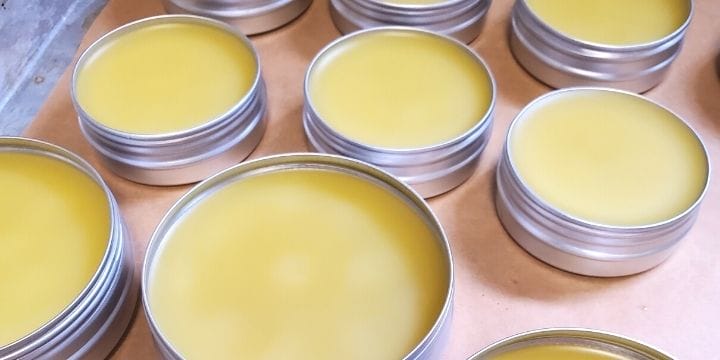
- Pour into containers to cool. I use empty Altoids tins.


As you might imagine, here at daycare we get quite a few cuts, scrapes, and scratches that need some boo boo cream. A little dab of this homemade healing salve and a good cartoon band-aid and we are good as new.
Mr. Kent doesn’t really appreciate our selection of band-aids. He would give anything to have a plain ole brown one. Plain is boring though, just get you an Elmo or PJ mask band-aid, they work just the same.

I’m always amazed at how much better this salve works than Neosporin from the store. I had a fundraiser for a local animal shelter and I sold this salve as one of the products. The people that bought it just raved about it.

Grandpa’s salve
I had a grandpa of one of my daycare kids tell me that his wife had a rash that she just could not get cleared up and they got out that salve as a last effort and it was gone in a day!
I get a ton of scratches in the garden and bites sometimes. This homemade salve clears them right up. I’ve even used it on a brown recluse bite and it did the job.
Lavender salve
Do Terra essential oils are pure and keep me from having allergy troubles that can occur with essential oils. I love knowing I’m not going to react to them. Information shared on this blog is not intended to diagnose, treat, cure, or prevent any disease, and has not been evaluated by the FDA. These are simply recipes that I use.

DIY healing balm
I don’t use anything else when I get hurt since I started making my own healing salve. It’s the best thing I’ve ever used and I know it’s safe for my body. I love knowing what’s in what I use. We make it in big batches and fill Altoids tins with it.
The salve lasts in the tin without refrigeration or anything. Even after a year, ours was still good when we found a tin of it we had misplaced. It’s great to have on hand for any minor injury.

Here are 20 recipes you can make with lavender.
If you prefer to make your own body products with healthy ingredients, check these out:
- Whipped body butter lotion
- Natural mosquito repellant
- Anti-itch bug bite sticks
- Pain-relieving cream
- Homemade luffa soap
- Homemade lanolin lip balm
- Homemade shower vapor tablets
- Homemade elderberry syrup
- Homemade elderberry gummies
- Calming lavender bath salts
Below is paste-ready copy. I included an important safety note because homemade salve is not sterile and should not replace proper first aid for open cuts or fresh burns.
Healing Salve Ingredients and Substitutions
This simple salve combines liquid oils, solid fats, beeswax, lanolin, and lavender essential oil. Each ingredient affects the texture, scent, and feel of the finished balm.
| Ingredient | Amount | Purpose | Possible substitutions |
|---|---|---|---|
| Coconut oil | ½ cup | Adds moisture and gives the salve a soft, creamy texture | Shea butter can make the salve richer and slightly firmer. For a coconut-free version, use additional olive or sunflower oil and increase the beeswax slightly if needed. |
| Olive oil | ½ cup | Keeps the balm spreadable and carries the other ingredients | Jojoba, sunflower, apricot kernel, or sweet almond oil may be used. Avoid almond oil when nut allergies are a concern. |
| Beeswax | ¼ cup | Thickens the oils and helps the salve remain solid at room temperature | Candelilla wax may be used for a plant-based balm, but it is firmer than beeswax. Begin with about half as much and test the texture before adding more. |
| Lanolin | 2 tablespoons | Creates a rich protective balm and helps it cling to dry skin | Shea butter or cocoa butter can provide richness, although they will not have exactly the same feel as lanolin. |
| Lavender essential oil | 10 drops | Adds a light lavender scent | Leave it out for an unscented salve or substitute another skin-safe essential oil. Always verify the appropriate dilution and patch-test the finished product. |
Substitutions will change the firmness, scent, color, and melting point. Make a small batch the first time you change the recipe.
This recipe makes a rich, multipurpose balm that is especially useful for moisturizing dry, rough skin. Have your clean containers ready before you begin because the mixture starts firming as it cools.
Discard it if it develops an unusual odor, color, texture, or any sign of contamination.
How to Test and Adjust Salve Consistency
The easiest way to test homemade salve is with the cold-spoon method. A small sample cools in about a minute, allowing you to adjust the entire batch before pouring it into containers.
For a firmer salve
Return the jar to the warm-water bath and stir in approximately 1 tablespoon of additional beeswax. Let it melt completely and perform another cold-spoon test.
A firmer balm may be helpful during hot weather or when the salve will be carried in a purse or garden bag.
For a softer salve
Stir in approximately 1 tablespoon of olive oil or another liquid carrier oil. Test the mixture again before adding more.
Add extra oil gradually. Too much can turn the salve into a loose ointment rather than a scoopable balm.
For a smoother salve
Make sure every piece of beeswax and lanolin has melted before filling the tins. Graininess can also develop when certain solid oils cool slowly or experience repeated temperature changes.
Allow the containers to cool at a steady room temperature without moving them.
Keep the original ratio in mind
This recipe begins with:
- 1 cup combined coconut and olive oils
- ¼ cup beeswax
- 2 tablespoons lanolin
Room temperature affects the final texture. Coconut oil becomes softer in a warm room and firmer in a cool one, so always test the salve under conditions similar to where you plan to store it.
Make the salve
- Add water to the saucepan.
- Place the heatproof jar in the water.
- Add the coconut oil, olive oil, and beeswax.
- Heat gently until completely melted.
- Add the lanolin and stir until smooth.
- Perform the cold-spoon consistency test.
- Add beeswax if the salve is too soft.
- Add liquid oil if the salve is too firm.
- Remove the mixture from the heat.
- Stir in the lavender essential oil.
- Pour the salve into clean, dry containers.
- Let the salve cool completely before covering.
- Add the lids and labels.
- Store away from heat, moisture, and sunlight.
Frequently Asked Questions
How do I make salve?
Melt ½ cup coconut oil, ½ cup olive oil, and ¼ cup beeswax together in a heatproof jar set in a pan of gently simmering water. Stir in 2 tablespoons of lanolin. Remove the mixture from the heat, add 10 drops of lavender essential oil, and pour it into clean, dry containers.
Let the salve cool completely before adding the lids.
How can I make homemade salve firmer?
Melt the salve again and add approximately 1 tablespoon of beeswax. Test a few drops on a cold spoon before adding more. Beeswax should be added gradually because a small amount can make a noticeable difference.
How can I make salve softer?
Reheat the mixture gently and stir in approximately 1 tablespoon of olive oil. Perform another cold-spoon test. Continue adding oil in small amounts until the balm reaches the texture you prefer.
Why is my salve grainy?
Graininess may develop when the solid ingredients do not melt completely or when the salve cools unevenly. Reheat it gently until it is completely liquid, stir well, and allow it to cool undisturbed at room temperature.
Can I make salve without lavender essential oil?
Yes. Leave out the lavender to make an unscented salve. This may be preferable for people who are sensitive to fragrances or essential oils. Topical lavender products can cause allergic reactions in some people, so patch-test a small area first.
Can homemade salve be used on cuts or burns?
Homemade salve is not sterile, so it is safest to use it as a moisturizer for intact, dry skin rather than as a replacement for first aid or medical treatment.
Clean minor cuts with water, control bleeding, and cover them appropriately. For a minor burn, cool the area under cool running water before applying anything; oils and ointments should not be placed on a fresh burn because they may trap heat. Seek medical care for deep wounds, signs of infection, large burns, blistering burns, or injuries involving sensitive areas.


This looks great! I’m looking for something specifically to use on a dry nose. I was thinking of adding eucalyptus and rosemary oils. Also wondering if there’s an adjustment I can make for it to be a little less solid so it goes on easier around the nose? Thank you!
Hi Robin! I think if you add a few drops of your other oils, it will be thinner like you’re wanting. It’s one of the best things I’ve ever made and we use it all the time. I have to make it over and over again, my whole family uses it. Sometimes when I do a fundraiser, I’ll make it for that and people just clammer over to get it. You’ll love it. And the eucalyptus would give it a great sinus clearing effect too. Great idea! It thins out great when you just rub it in your fingers. Happy making and thanks for asking!
Thank you so much for your quick response!!
Youre welcome!
Can you use other essential oil smells, or is the lavender part of what makes it good. Lavender is not my favorite smell.
Hi Annette,
You can, but lavender oil is very healing and it’s a big part of what makes it work so well. There’s not much in there and when we use the salve, I can’t smell it. I mostly smell the beeswax and main ingredients.
Thank you for checking out the recipe, you’ll love how well it works. I have never bought Neosporin again after I started making this years ago.
Any input on a different essential oil other than lavender? It gives me horrible headaches.
Lavender is very healing, I’m not an expert, I’m sure there are others that would work as well. But I find that I get headaches from other brands of essential oils other than do terra because they aren’t completely pure. I would suggest you either try do terra brand or check around for another one that is as great a healer as lavender. I wouldn’t say leave it out because this salve is so amazing. I know there are many medicinal flowers for sure. I just made this mixture with some ingredients I had on hand and it worked so good I never looked back. We’ve been using it for years. Thank you for checking it out, I hope you find a solution!
I made a batch . Smells and going on smoothly. My question is it seems a little more solid. I’m just checking to make sure I have the right consistency. I followed the recipe.
If it’s going on smoothly, it’s perfect. Because it has coconut oil in it, the room temperature effects the consistency somewhat, but as long as you can use it, you’re doing great.
Hello!
I found this page on Pinterest
I am wondering if I can make the Healing salve without the lanolin?
Because I don’t have any.
I am wondering what purpose does it serve in the recipe?
Hi Alisa,
Lanolin has a ton of healing properties and is also moisturizing and holds the structure of the salve. You can make it without, but it would be more liquid and not a salve. Other ingredients in the recipe do have healing properties as well, but there is nothing like lanolin. You can get a small container of it at the pharmacy if you want to add it. Or give it a try without. Thanks for asking.
Hello.
Can this Salve be used on the face after esthetic treatme to like fibroblast plasma treatments. I’m looking to make something to send home with clients to apply during the healing process when skin is dry and irritated.
Also is lavender the best oil or are there other “scented” oils I can also use?
Thank you- Lauren
Hi Lauren,
I am not a medical doctor, so I wouldn’t know if it could be used after other treatments. It works super good for everything for us. Lavender is a very healing oil. I know others are, but we love it with lavender. Thank you so much for checking it out.
The lanolin you use, is it an oil?
Hi Debra,
Lanolin is a sticky, thick substance that comes from the wool of sheep and their skin. It’s hard to describe. But this is the one I have been using with my affiliate link. https://amzn.to/3h0lOJn. Hopefully that helps. Thanks for reading!
What can i use in place of coconut oil? Im highly allergic.
You can use olive oil, but the salve will be more runny. You could try using half the amount. That would be the only other oil I know of with healing properties. But you would probably have to put it in a bottle and pour some out. It would still work great though! Thanks for asking.
Definitely giving this a go, looks like it has so many great uses, thanks for sharing your recipe ?
It’s the best. THanks for checking it out.
Can you pls tell me what we can use in substitute of lonalin?
You can leave out the lanolin, but it has a ton of healing properties. I would definitely use it if you can.
This looks like a great project for my daughter and I to do this summer. What a great gift it would make as well. Love incorporating essential oils into remedies.
Good idea, it does make a wonderful gift. THanks for checking it out!
I need to try this. I have arthritis, tendonitis, and bercitis in one hip from a sports injury and I have to take ibuprofen way more often than I’d like.
You will be A-MAZED at how well this works. I still can’t believe it. Thanks for checking it out!
I’ve tried them and you’re right! I suffer from very chapped lips and the healing salve works far better than anything I’ve ever tried. I love the name Sore Away, and it also works like a charm! Thanks so much for sharing!
Thanks for the review, Kayla. I’m glad they are working for you!
Love your recipes. I need to get a few additional oils to make them. I usually just use the lavender and peppermint each mixed with the coconut oil. Maybe adding the other few will make the difference.
You will LOVE it Valerie, It works great! Thanks for reading and for your comment!
That was supposed to read “massage”
As a ssage therapist (in training), I hope to work with athletes some day. I can’t wait to try out your Sore Away!!
It’s AMAZING! You have to! Thanks for checking it out!