10 Great Reasons to Cook with Your Kids!
This page may contain affiliate links. Learn More.
10 great reasons to cook with your kids! Discover how cooking together builds life skills, confidence, healthy habits, and lasting memories. Cooking with kids is important.
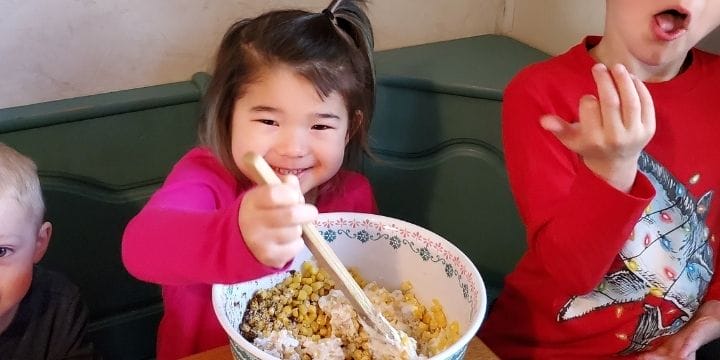
- Cooking will give your kids the gift of knowing how to make good food. Your preschooler may not be a 5-star chef, but if they learn skills like cracking eggs, or how to measure ingredients, they are well on their way to having the knowledge of how to follow a recipe to feed themselves someday.
- It’s a self-esteem builder. If we are patient with kids as they help us cook, we can teach them they can do it. As their fine motor skills increase and their cognitive skills increase, they will be already set with confidence in their abilities to do challenging cooking tasks.
- Cooking at home with the kids is more nutritious than eating out.
- Cooking with kids gives you time to spend together as you prepare and eat the meal together.
- Kids are more likely to try healthy food if they help to prepare it. I have seen time and time again kids who were picky and don’t like anything pick up something they have never given a chance before and try a bite of it because they helped make it. Many times they even liked it as well. Click here for 10 meals kids like that aren’t junk!
- Cooking makes kids smart! Cooking involves reading, science, and math, important skills for success. Cooking teaches these skills to kids in a fun and memorable way.
- Cooking increases creativity. Using their imagination to create ideas for meals or recipes improves problems solving skills as well as helps kids think about food in new and original ways. There is nothing more satisfying than creating a new combination and loving it.
- Sensory experiences teach kids a lot. Kids explore the world through sight, hearing, smell, taste and touch. Food helps kids focus on all of those senses together as well as each one individually.
- Cooking helps kids learn to follow directions. Cooking requires following a recipe, measuring and other cognitive skills. An enjoyable cooking experience can help kids learn those skills in a memorable, fun way.
- Cooking improves fine motor skills and eye-hand coordination. Think of cracking and egg, or popping or hatching as the kids say. Leveling off a cup of flour, or pouring 4 cups of milk into a bowl without spilling requires a lot of muscle control. Cooking is a great fun way to help the kids develop these vital skills.
Cooking Skills by Age
One of the best ways to cook with kids successfully is to choose tasks that match their age and abilities. Kids learn confidence in the kitchen when they are given jobs they can actually do. Even toddlers can help with simple cooking activities!
Toddlers (Ages 1–2)
Toddlers love being included and exploring with their senses. Keep tasks simple and safe.
Toddlers can help:
- Wash fruits and vegetables
- Tear lettuce or herbs
- Stir ingredients in a bowl
- Sprinkle cheese or toppings
- Mash soft foods like bananas or potatoes
- Hand ingredients to an adult
- Pour pre-measured ingredients
At this age, the goal is exploration and fun, not perfection.
Preschoolers (Ages 3–5)
Preschoolers are capable of much more and LOVE feeling independent.
Preschoolers can help:
- Crack eggs
- Measure ingredients
- Stir batter or sauces
- Roll dough
- Cut soft foods with kid-safe knives
- Peel bananas or oranges
- Set the table
- Help read simple recipe steps
- Shape cookies or meatballs
Cooking at this age builds:
- Fine motor skills
- Early math skills
- Confidence
- Patience
- Following directions
Early Elementary Kids (Ages 6–8)
Kids this age can begin taking on more responsibility with supervision.
They can help:
- Read recipes aloud
- Use a hand mixer
- Grate cheese
- Use a vegetable peeler
- Measure liquids accurately
- Assemble sandwiches or salads
- Help pack lunches
- Learn basic knife safety
This is a great age to start teaching kitchen safety and healthy eating habits.
Older Kids (Ages 9–12)
Older kids often enjoy the independence of preparing simple recipes on their own.
They can:
- Follow simple recipes independently
- Use the stove with supervision
- Chop fruits and vegetables
- Make simple breakfasts or lunches
- Bake muffins, cookies, or bread
- Learn meal planning basics
- Help grocery shop and compare prices
Cooking teaches important life skills that kids will use forever.
Teenagers
Teenagers should gradually learn how to prepare complete meals independently before adulthood.
Teens can learn:
- Meal planning
- Budget cooking
- Grocery shopping
- Safe food handling
- Cooking family meals
- Using kitchen appliances safely
- Preparing healthy balanced meals
Teaching teens to cook helps prepare them for adulthood and gives them confidence to care for themselves someday.
Remember: The Goal Isn’t Perfection
Cooking with kids will probably be messy, slower, and louder than cooking alone—and that’s okay. The memories, confidence, and life skills children gain are worth every spilled cup of flour.
Recipes for kids
Click on the links for recipes that are fun for kids. Banana-rama bread, applesauce, pumpkin pie, pasta, or fruit ka-bobs. There are many more, click around in recipes for lots of ideas.
Check out these basic cooking skills for kids.

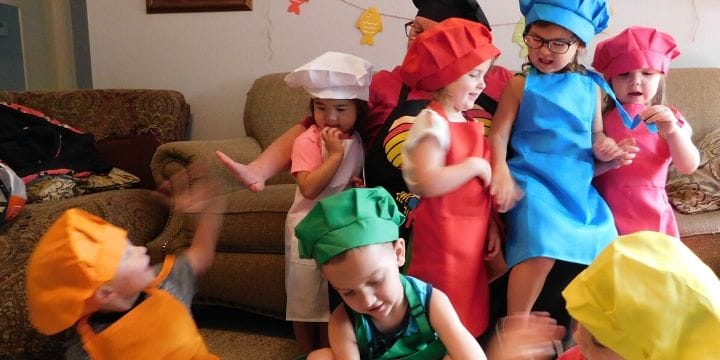
It can be challenging to cook with kids in the kitchen, especially if like me, you are outnumbered 7 to 1. I have 5 tips for making cooking with kids less stressful for you.
Cook with kids
- BE PREPARED! This is true for most activities we do with kids. Get all of the ingredients and tools you need ready before you invite the kids to the work area. This will prevent A LOT of misfortune that can arise from leaving them unattended to grab something else you need.
- Print up the recipe. I print recipes for what we are making and hang them on the wall next to our cooking area. As we make the recipe I read it to the kids and then we do that step. This connects pre-reading skills and makes kids understand that words have meaning. It’s also handy to have the recipe available for me to refer to as we do the steps together.
- Always talk about washing hands and being clean. The first thing I do is wash the table and tell the kids I’m getting all the germs off and then we go to the bathroom and wash their hands to get all the germs off as well. If someone picks up a toy, puts their hands in their mouth, or wipes their nose, I have them go back and wash again and remind them we don’t want to get our germs in the food.
- Give each child a turn to do something for the recipe. I just move the bowl or pan in front of whoever’s turn it is and gives them the next ingredient. That way everyone knows whose turn it is and knows they will get turns as well. It’s hard to be patient when you are little, but it helps a lot if we remain calm and teach them everyone wants a turn and they are not the only one waiting. They can see the cooking supplies coming closer to them and know it’s almost time.
- If there is something you can split up to give more turns when you cook with your kids, do it. For instance, if the recipe calls for 3 cups of flour, let three different kids put in one cup of flour so their turns are faster and they get more of them. 4 different kids can “pop” four eggs and everyone can stir! Once it’s time to stir, I take the time to let each child stir it before we move on to other things. The best recipes are the ones that have lots of stirring. Kids love to stir.

Be patient, they are going to spill and smash and make a mess, but this failure is part of learning when you cook with your kids. I’m messy when I cook too, so who am I to judge?
I made the mistake with my daughter of being impatient in the kitchen and she still struggles with that sometimes as a grown up, so I learned to CALM DOWN when we are cooking. Sometimes I wish I could go back and change things, but all I can do now is do better.
My kids love to cook and love to eat what they cook, so we do it a lot. Every fall we make a cookbook for our parents full of recipes we have cooked.
Benefits of cooking with kids
Cooking doesn’t always have to be complicated or super extravagant. You can cook with your kids simple things like snack mixes or fruit salad. Just getting to cut or mix or pour is all the kids need for a great learning opportunity. The important part is letting kids get hands-on with the preparation of their food.
My kids don’t cook with me every week, but we at least cook a couple of things together each month and when we make our cookbook they get to make a recipe almost every day for a whole month! I have teenagers and grown adults that still tell me cooking with me was their favorite thing to do at Little Sprouts. That’s the proof the knowledge lasted a lifetime.
Try to think of something you can cook with your kids today, and you’ll be enjoying a lot more than just some yummy food!
Check out some fun recipes to cook with your kids:
- Ice cream in a bag
- Spaghetti pie
- Cat eyes
- Homemade pretzels
- Lotsa pasta
- Fun fruit pizza
- Broccoli salad
- Blueberry peach smoothie
- Egg veggie breakfast casserole
- Cowboy cookies
- Chicken Waldorf salad
FAQ About Cooking With Kids
What age should kids start cooking?
Children can begin helping in the kitchen as toddlers with simple supervised tasks like stirring, washing produce, or pouring ingredients. Cooking skills can grow along with the child.
What do kids learn from cooking?
Cooking teaches:
- Math skills
- Reading skills
- Science concepts
- Fine motor skills
- Problem-solving
- Patience
- Confidence
- Healthy eating habits
Cooking is one of the best hands-on learning activities for kids.
Why is cooking with kids important?
Cooking together helps children build life skills while also creating meaningful family memories. Kids who help prepare food are often more willing to try new foods and develop healthier eating habits.
Is cooking with kids messy?
Yes, and that’s completely normal! Spills and messes are part of the learning process. The goal is progress and confidence, not perfection.
How do I cook with multiple kids at once?
Give each child a specific job and take turns adding ingredients or stirring. Splitting tasks into smaller steps helps everyone stay involved and reduces frustration.
What are easy recipes to make with kids?
Some great beginner recipes include:
- Fruit salad
- Smoothies
- Pancakes
- Homemade pizza
- Muffins
- Trail mix
- Cookies
- Pasta salad
Simple recipes with lots of stirring and pouring are usually the biggest hit with kids.
How can I make cooking with kids less stressful?
Preparation helps a lot. Measure ingredients ahead of time, gather supplies before starting, and expect a little mess. Keeping the experience positive and relaxed makes cooking more enjoyable for everyone.
What kitchen skills should preschoolers learn?
Preschoolers can begin learning:
- Measuring
- Stirring
- Cracking eggs
- Pouring ingredients
- Rolling dough
- Washing produce
- Following simple directions
These activities help strengthen fine motor skills and independence.
Can cooking help picky eaters?
Many picky eaters are more willing to try foods they helped prepare. Being involved in cooking gives kids ownership and curiosity about the food they eat.
What safety rules should kids learn in the kitchen?
Kids should learn:
- Washing hands before cooking
- Keeping raw meat separate
- Being careful around hot surfaces
- Using kitchen tools safely
- Cleaning up spills right away
Kitchen safety should always be taught alongside cooking skills.
How often should kids cook?
You don’t have to cook with kids every day to make an impact. Even cooking together a couple of times each month can build lasting memories and valuable life skills.




Great article! My kids absolutely love cooking with me and are a part of making every meal…even if it’s just stirring! Thanks for sharing at the Lets Get Real Blog Hop!
Thanks! It’s great to hear your kids are in the kitchen with you! That’s awesome!
I am so grateful that my mother made sure we all cooked with her often! And sometimes it boggles my mind when a friend (usually well into their 20s) will come over and ask me for help figuring out food because take-out is just too expensive but they don’t know the first thing about planning menus, effective grocery shopping, or even basic cooking.
It’s really sad. And always makes me so grateful for my own skills, even if they’re not top-notch. I can still feed myself (and hubby) without having to rely on someone else to have done everything but heat it up.
It’s a wonderful skill children need to learn and it’s super fun too. Thanks so much for reading. I’m so glad you have some great cooking experiences with your mom. 🙂
Great post, Christina! When referring to childhood, so many talk about baking with a grandmother/mother, gatherings in the kitchen and favorite meals – cooking and baking with kids creates wonderful memories! (Pinning to my Do Play With Your Food board!)
It’s a great time! I have wonderful memories of cooking with my grandmother! Thanks so much for reading and sharing!