How to Teach Kids About Germination: Fun Seed Activities for Preschoolers
This page may contain affiliate links. Learn More.
How to teach kids about germination with fun, hands-on activities! Help children discover how seeds grow while learning science through gardening. The perfect garden activities for preschool.

There is not much skill needed to sprout a seed; God does all the work for us in the little miracles He makes for the production of plants.
How to teach kids about germination
At Little Sprouts, we learn about all the parts of the process of growing food. For kids to become master gardeners in their lifetime, we need to teach kids about germination and how the process works.
Seeds are alive! Inside of each seed, there is an embryo. If the conditions in which the seed is stored are good, the seed will protect the embryo until it is placed in moist soil or water. The seed will actually die if it gets wet before it’s time to plant it, or if it gets too hot. Once the seed is moistened, the embryo comes out of dormancy and then eats its “lunchbox” or the remainder of the seed inside the seed coat. Kind of like a baby chick consumes the contents of the egg.
Once the seed eats its “lunchbox”, it will break through the seed coat and send a tiny root to anchor the plant in the ground. Once the plant is anchored, the seed will send up a small shoot. That shoot will unfurl two tiny cotyledons or leaves and reach for the sunlight.
Once these leaves open up, the seed will send roots downward. Those roots continue to grow until they reach the water and nutrients they need, and then the plant will go back to work on its leaves. It will produce two more leaves that are true to the plant, called true leaves. The plant will then grow from there.
What Is Germination?
Germination is the process by which a seed begins to grow into a new plant. When a seed receives the right conditions—usually water, warmth, and air—it “wakes up” from dormancy and starts growing.
Inside every seed is a tiny baby plant called an embryo. The seed also contains stored food that nourishes the embryo until it can make its own food through photosynthesis.
The germination process happens in stages:
- The seed absorbs water and swells.
- The seed coat softens and cracks open.
- A tiny root emerges first and grows downward to anchor the plant and absorb water.
- A shoot grows upward toward the light.
- The first leaves open, allowing the plant to begin making its own food from sunlight.
- True leaves develop, and the seedling continues growing into a mature plant.
For kids, you might explain it this way:
“Germination is when a seed wakes up and starts growing. First it grows roots, then a stem and leaves, and eventually becomes a plant.”
Watching germination happen in a clear baggie or glass jar is a great way for children to see this amazing part of the plant life cycle in action.
Germination of a seed for kids
This is a fairly complicated process and hard for me to grasp as an adult. Can you imagine the difficulty as we teach kids about germination? So what’s a girl to do? There are clear boxes that can be purchased to show kids what goes on under the soil when planting a seed, but they are expensive, and I have not had great luck with them in the past.
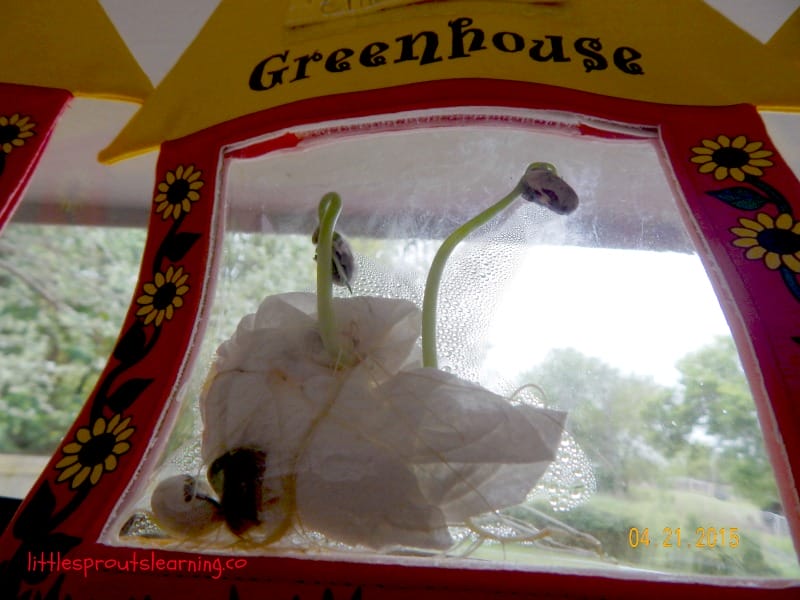
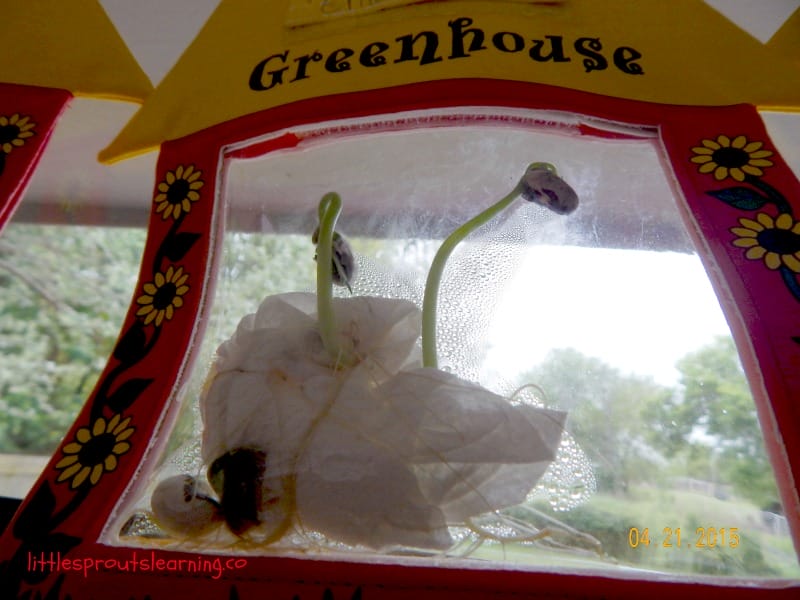
The most inexpensive and easiest way to show the kids what happens is to plant seeds in zip-lock bags. Here’s how we do it at Little Sprouts:

Why Teaching Germination Is Important for Kids
Teaching kids about germination helps them understand where food comes from and introduces them to the wonders of science through hands-on learning. Watching a tiny seed sprout into a plant may seem simple, but it teaches valuable lessons that children can carry with them for a lifetime.
Builds Science Skills
Germination is an excellent introduction to biology and plant science. Children learn about plant life cycles, what living things need to survive, and how nature works. They begin making observations, predictions, and discoveries just like real scientists.
Encourages Patience
In a world of instant gratification, growing a seed teaches children that good things take time. They learn to wait, observe, and care for something over days and weeks as it grows.
Develops Responsibility
Children quickly learn that plants depend on them for care. Watering seeds and checking on their progress helps build responsibility and confidence as they see the results of their efforts.
Strengthens Observation Skills
As children watch roots emerge, stems grow, and leaves unfold, they learn to notice details and changes over time. These observation skills are important for science learning and everyday problem-solving.
Connects Kids to Nature
Many children don’t realize that fruits, vegetables, flowers, and trees all begin as seeds. Learning about germination helps them develop a deeper appreciation for nature and the world around them.
Encourages Healthy Eating
Children are often more willing to try fruits and vegetables when they have helped grow them. Understanding how plants grow creates a connection to food that can encourage healthier eating habits.
Supports Fine Motor Development
Handling seeds, filling containers with soil, watering plants, and planting seedlings provide opportunities to strengthen fine motor skills and hand-eye coordination.
Inspires a Lifelong Love of Gardening
For many children, watching their first seed sprout sparks a curiosity that grows into a lifelong interest in gardening, nature, and science. Teaching germination is often the first step toward raising confident young gardeners.
Most importantly, germination teaches children that something amazing can come from something very small. A tiny seed holds the promise of flowers, vegetables, trees, and even future gardens. That’s a powerful lesson for little learners.
Supplies Needed for the Germination Experiment
One of the best things about teaching kids about germination is that it requires very few supplies. You probably already have everything you need at home or in the classroom. This simple seed experiment is inexpensive, easy to set up, and allows children to observe the entire germination process up close.
What You’ll Need
- Zip-top sandwich bags (one per child)
- Paper towels
- Water
- Large seeds such as:
- Bush beans
- Lima beans
- Corn
- Squash
- Pumpkin
- Sunflower seeds
- Permanent marker for labeling bags
- Tape
- Sunny window
Optional Supplies
- Magnifying glass for closer observation
- Garden journal or notebook
- Ruler for measuring root and shoot growth
- Labels or stickers for decorating bags
- Camera to document daily changes
Choosing the Best Seeds
Large seeds work best for young children because they are easy to handle, and the growing roots and shoots are easy to see. Bean seeds are especially popular because they germinate quickly and clearly show each stage of growth.
Preparing for Success
Before beginning, moisten the paper towels so they are thoroughly wet but not dripping. Too much water can cause mold, while too little water may prevent the seeds from sprouting. The paper towel should feel similar to a wrung-out sponge.
Once the supplies are gathered, children can help assemble their germination bags and begin making predictions about what will happen to their seeds over the coming days. This simple setup turns an ordinary window into a living science experiment that kids will be excited to check every day.
Process of germination of seeds for kids
Take half of a paper towel and moisten it. Wring it out until it is not dripping wet but more than just damp. Give each child a moist paper towel and a ziplock sandwich bag. Have the children place the paper towel inside the baggie. Next, give them three or four large seeds to place in the bag.
I use large seeds because they are easy to handle and easy for the kids to see. Beans, corn, squash, or other large seeds work great. Have the children make sure the seeds are touching the paper towel. Next, write each child’s name (or if they are old enough, have them write it) on the baggie and tape them to the window.
What Happens During Germination?
- Seed absorbs water
- Root emerges
- Shoot appears
- Cotyledons open
- True leaves develop
Germination Vocabulary for Preschoolers
- Seed
- Root
- Shoot
- Cotyledon
- Germination
- Seed coat
Germination for kids
After a few days, you will be able to see a small root begin to grow, and you can watch the process the seed goes through under the ground, happening inside the baggie. This really helps teach kids about germination. And it’s a great part of the plant life cycle that kids learn so much from.
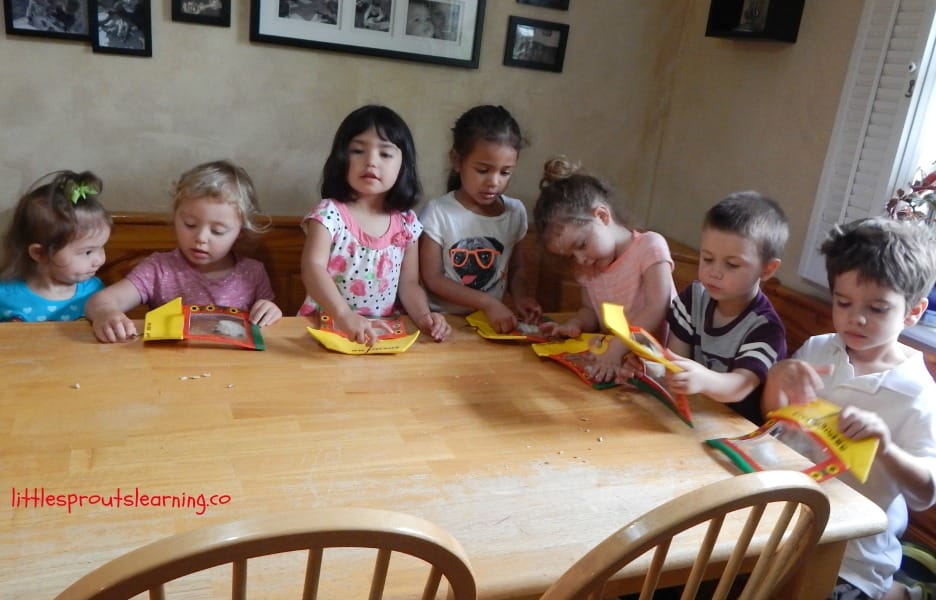
We used these greenhouses because we happened to have them. Someone gave me a pack of 30 a few years ago, and we had 7 left for this activity. A ziplock bag works just as well. You could also germinate seeds in a small pot, a cup, or a slice of luffa sponge.

How Long Does Germination Take?
| Seed | Germination Time |
|---|---|
| Bean | 5-10 days |
| Corn | 7-10 days |
| Squash | 5-10 days |
| Cucumber | 3-10 days |
| Sunflower | 7-14 days |
Explain the stages of germination
It’s an amazing process to watch! I have learned so much from this activity. It’s a hands-on way to learn. Kids learn so much more from doing than from watching and this is a great activity they can do. I promise you will learn right along with them. Even if you don’t work with kids, I encourage you to try this experiment. Learning what’s happening under the ground will help you understand the process you’re watching in the garden.
If you want to read the full story of how we got started growing our own food at Little Sprouts and get all the basics to start yourself, check this out. The Journey of the Little Sprouts: A Guide for Growing a Better Tomorrow.
This activity teaches kids life cycle science as well as fine motor skills and observation techniques. Patience is practiced when growing a seed, whether it is under the ground in a clear baggie taped to the window. There is so much that can be learned from a seed. Try growing something with your kids today! These seed bombs are another way to plant seeds with kids! They will love it! These preschool garden projects are full of even more ideas.
But seeds can go bad if they are exposed to moisture, heat, or too much time.
FAQ
How do you explain germination to a child?
Germination is the process by which a seed wakes up and begins growing into a plant.
What is the easiest seed for kids to germinate?
Beans are one of the easiest seeds because they sprout quickly and are large enough for children to handle.
Can seeds germinate without soil?
Yes. Seeds only need water, air, and the right temperature to sprout.
How long does it take a seed to germinate?
Most garden seeds sprout within 3 to 14 days.
Extend the Learning
Once your seeds have sprouted, plant them in a small pot or garden bed and continue observing their growth. Children can measure the plants each week, draw pictures in a garden journal, and compare how different plants grow. This simple experiment can become a weeks-long science project that teaches responsibility, observation, and a love of gardening.
For more garden activity ideas, check these out:
- 25 Rainy Day Garden Activities
- Garden Activities for Babies
- 30 Garden Activities for Kids
- Indoor Garden Activities For Kids



They are neat. I did something (sort of) similar. I took empty, clean plastic bottles, cut them in half and used the bottom as the pot and top to cover making a really cool terrarium. It was a quick, fun project for my boys.
Cool! Thanks for checking it out!
Those are SO cool! Do you know if they still make them? Off to search. Or, like you said, I could try using ziplocks. Such a great idea to put them up against the window like that, so you can see all the details.
I don’t know, I’ve had them for years and they were old when I got them, but you could sure look for them. Thanks for checking this out! 🙂