Daycare Lesson Plans on Andy Warhol
This page may contain affiliate links. Learn More.
One of the most engaging ways to introduce young children to the world of art is through the study of famous artists in your lesson plans, and Andy Warhol is a fantastic choice. Warhol’s use of bright colors, simple shapes, and everyday objects makes his artwork approachable and interesting for preschoolers. These daycare lesson plans on Andy Warhol will give you simple ideas to get your toddlers and preschoolers engaged in the fascinating world of art.

Through a variety of sensory, visual, and hands-on activities, children can explore his techniques, themes, and legacy in a way that is age-appropriate, fun, and educational. This lesson plan focuses on helping daycare providers introduce Andy Warhol to children ages 2 to 5 using creative, interactive methods.
For a printable copy of this daycare lesson plan on Andy Warhol with a supply list and the Oklahoma ELG’s listed for the QRIS program, check out this listing on Etsy.
Who Was Andy Warhol?
Begin the lesson by giving a brief, simple introduction to Andy Warhol. Explain that he was an artist who liked to paint and print pictures of things that people see every day. He made art with soup cans, pictures of famous people, and used bright, bold colors. I like to begin every lesson plan with a book and build from that. This “What Colors Do You See?” book is what I used this time. And we built color lessons out from there.
This book shows the children a few of Andy Warhol’s most famous artworks and explores his vibrant use of color.
Use age-appropriate language like, “Andy Warhol was a man who made pictures in fun colors. He liked to take pictures of everyday things and make them into art. He used colors that didn’t always match what we see in real life, like a pink banana or a green face.”

Story Time and Discussion
There are several wonderful children’s books about Andy Warhol that are perfect for circle time. Titles like “Andy Warhol: Getting to Know the World’s Greatest Artists” by Mike Venezia or “The World of Andy Warhol” by Susan Goldman Rubin can be adapted or summarized for toddlers and preschoolers. Read a few pages and use pictures to spark conversation. Ask open-ended questions like:
- “What colors do you see?”
- “Have you ever eaten soup like this?”
- “Do you think this art is silly or serious?”
- “Why do you think he made a green face instead of a real one?”
This type of dialog encourages observation, critical thinking, and expressive language in young learners.
Pop Art and Bright Colors
One of Warhol’s most recognizable styles is his use of Pop Art—a style that uses bold, simple images from everyday life. He used high contrast and repeated the same picture with different colors. To help children understand this, show examples of his pop art, then point out common objects in your classroom that could be made into art, like an apple, a shoe, or a toy.
Provide a tray of colorful paints and show children how to paint the same object multiple times, each with a different color. You can use stamps, stencils, or cookie cutters dipped in paint to repeat shapes. This mimics Warhol’s technique of repetition and variation.

Repetitive Portraits with Crayon Rubbings or Stamps
Print out simple black-and-white line drawings of a familiar object or even the children’s faces (you can make copies of a photo turned into a simple outline). Have the kids color several versions using different colors for each. Another option is to create a stamp or rubbing plate and let the kids make repeated impressions on paper.
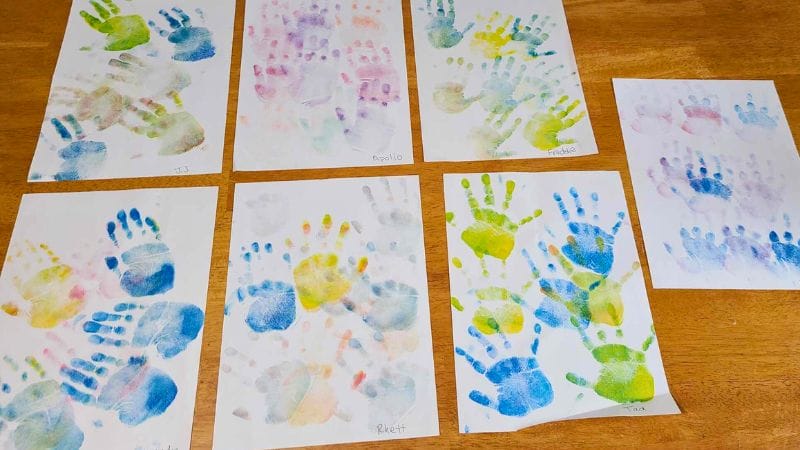
We did it with handprints in different colors of ink and ended up with a very Warhol inspired piece of pop art for each child. They had tons of fun making them too. Smiles all around.
This hands-on activity helps kids explore repetition, variation, and predictability. It’s a great way to work on fine motor skills while exploring visual art in the style of Warhol.


Warhol used bananas in several art pieces, so we used bananas to start out our lessons. I brought 16 bananas and we counted them, arranged them, sorted them, and tasted them.
We did a banana coloring sheet as well. You can talk about yellow, or give kids creative liberties in how they want to make their pop art.


Color Mixing Warhol Style for Toddlers
Warhol loved experimenting with bold and unexpected color combinations. Use this as an opportunity to explore color theory with the kids. Set up a simple color mixing station with red, blue, and yellow paint. Give each child a palette or tray and let them experiment with mixing colors to create new ones.
Show them how Warhol might have used green, purple, or orange to make a face or a background. Ask questions like:
- “What happens when we mix red and blue?”
- “Can we make a silly color for a soup can?”
- “What’s your favorite color you made today?”
This sensory-rich experience taps into science, art, and language development.
Printmaking with Household Items
Warhol used printmaking techniques like silk screening in his art, which isn’t practical for young children, but can be simplified through other forms of printmaking. Try these kid-friendly printmaking ideas:
- Cut sponges into simple shapes and let kids dip them in paint and press them on paper.
- Use the bottoms of plastic cups or jars to make circular prints.
- Roll paint onto bubble wrap and press it onto paper for a unique texture.
These simple activities give children the feel of repetition, texture, and layering that Warhol used, but in a developmentally appropriate way.
Pop Art Portraits
Take photos of each child, print them in black and white, and glue them to a sheet of paper. Then let the children paint over them using bold, bright colors like blue faces, red hair, or green eyes—just like Warhol did with his portraits. This is a great activity for developing self-identity and creativity while honoring Warhol’s artistic legacy.
Provide mirrors and encourage the children to look at their features. Talk about what makes everyone unique. Then, let them interpret themselves in their own pop art style.
Soup Can Art Activity
Warhol’s Campbell’s Soup Cans are iconic, and they make a great introduction to the idea of turning everyday items into art. Start by showing the kids a real soup can, then show Warhol’s soup can prints. Talk about how he took something boring and made it fun by using art.
Provide the children with a paper template of a soup can, or help them trace one. Then let them decorate their can using markers, crayons, stickers, and paints. Encourage them to use unexpected colors—maybe a purple soup can with yellow letters. This helps them express their creativity while also learning about color contrast and artistic interpretation.

Music and Movement Inspired by Warhol
Warhol was deeply connected to music and pop culture. He managed bands and surrounded himself with musicians and celebrities. Incorporate music and movement into your Warhol lesson with upbeat music, colorful scarves, and pop-inspired songs. Create a dance party with flashing lights and bright decorations, and let kids move like “pop stars.”
You can also play a game like “Pop Freeze Dance,” where kids dance to music and freeze when the music stops, just like a still frame in a pop art print.
Snack Time with a Pop Art Twist
Bring Warhol’s love of everyday items into snack time. Serve snacks in colorful containers or cut fruits and vegetables into fun shapes. Talk about how food can look fun and be part of art.
You can even give each child a paper soup can label and let them decorate it with what kind of soup they would make, banana soup, cookie soup, etc. It’s silly, imaginative, and ties perfectly into the Warhol theme.
Dramatic Play and Imagination
Set up a pretend “pop art studio” in your dramatic play area. Add play cameras, paintbrushes, soup cans, pretend art supplies, and frames. Children can pretend to be artists, photographers, or models. Include dress-up clothes with bold patterns and bright colors. Let the kids act out being artists and making their own museum. Talk about how artists like Andy Warhol had studios and made their art in exciting places with lots of people and colors. Encourage the kids to pretend to be artists, making something brand new.
Outdoor Chalk Pop Art
Take the lesson outside with sidewalk chalk art in Warhol’s style. Draw a simple object several times (like a flower, a heart, or a sun) and invite the children to color each one in a different way. The sidewalk becomes your pop art gallery. Kids can also trace each other’s shadows in bold colors or draw their own faces using unexpected shades. Outdoor art not only inspires creativity but also gives kids fresh air and space to explore big, bold ideas.
Literacy and Language Activities
Encourage journaling or storytelling through pictures. Ask children to draw something they see every day and then write a sentence they say about it, much like how Warhol used daily objects in his art.
Parent Involvement and Art Show
At the end of your Andy Warhol week, host a pop art gallery walk. Hang the children’s art on the walls or clip it to string with clothespins. Invite families to come and view the exhibit. Offer simple refreshments and encourage the children to talk about their artwork.
Send home a brief newsletter or note explaining who Andy Warhol was and what the children learned. Include photos of the week’s activities so parents can see the connections between art, creativity, and development.
More Fine Art Lesson Plans
For more ideas studying famous artists, check these out:
- Daycare Lesson Plans on Henri Matisse
- Daycare Lesson Plans on Jackson Pollock
- Daycare Lesson Plans on Louise Bourgeois
- Daycare Lesson Plans on Frida Kahlo
- Daycare Lesson Plans on Picasso
- Kids have a lot of fun with these Daycare Lesson Plans on Jean-Michel Basquiat with lots of relatable art mediums and cultural interest.