How to Grow Nasturtiums for a Beautiful Edible Garden
This page may contain affiliate links. Learn More.
How to grow nasturtiums for a beautiful edible garden! Learn simple tips to grow colorful flowers that attract pollinators and support your garden. For more beginning gardening information, check this out.
Nasturtiums are easy to grow and smell amazing. They grow well in containers, poor soils, and don’t require full sun. In the south, they will burn up when summers get hot. If you’re looking for more fruits and vegetables that grow in the shade, check this out.
There are many varieties of nasturtium. Their seeds can be hard to germinate, so you can soak them for 24 hours before you plant them for better results.

Nasturtiums make a great flower for a children’s garden because they grow easily and super-fast. They make a beautiful cut flower.
Nasturtiums also make great companion plants for many food crops. They are a great trap crop for aphids as well as drawing pollinators. There are many reasons they benefit your vegetable garden. They are the perfect companion plants for honeydew melons! And also make great companions for cantaloupe!
How to grow nasturtiums from seed
Plant nasturtium seeds in early spring. They need well-drained soil and at least 6 hours of sunlight per day. The more sun they receive, the more they will bloom.
Plant seeds half an inch deep spacing them 10-12 inches apart. They should germinate in 7-10 days.
Water regularly, about one inch of water once a week throughout the season.
They can also be sown indoors 4-6 weeks before the last average frost date and transplanted outside after danger of frost has passed.
Where to plant nasturtium in the vegetable garden
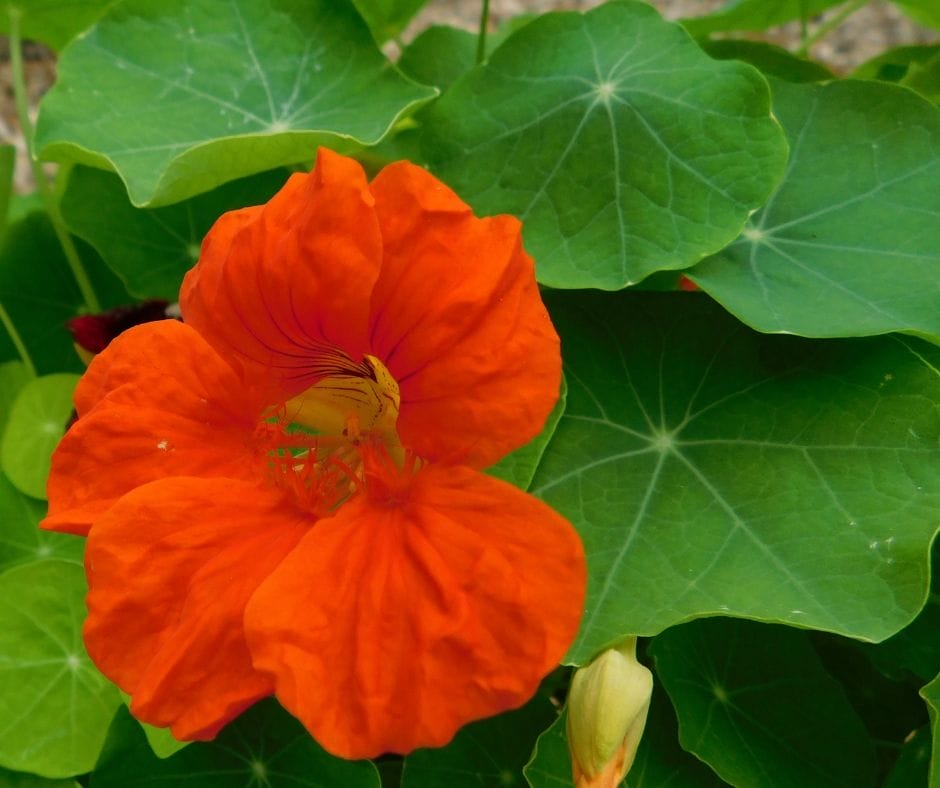
Hummingbirds and pollinators love nasturtiums because of their gorgeous bright colors. They grow in vibrant reds, oranges, and yellows. Growing nasturtiums, sunflowers, and zinnias are some of my favorite things to do in the garden. I love growing marigolds for garden helpers too. And I remember always having them in our gardens as a kid.
They come in two types, climbing or vining and a bush type. The vining variety makes a beautiful spiller for container plants, especially hanging baskets. They also make a great ground cover to shade out weeds under tall plants such as corn.
Nasturtium flowers can be single or double blooms

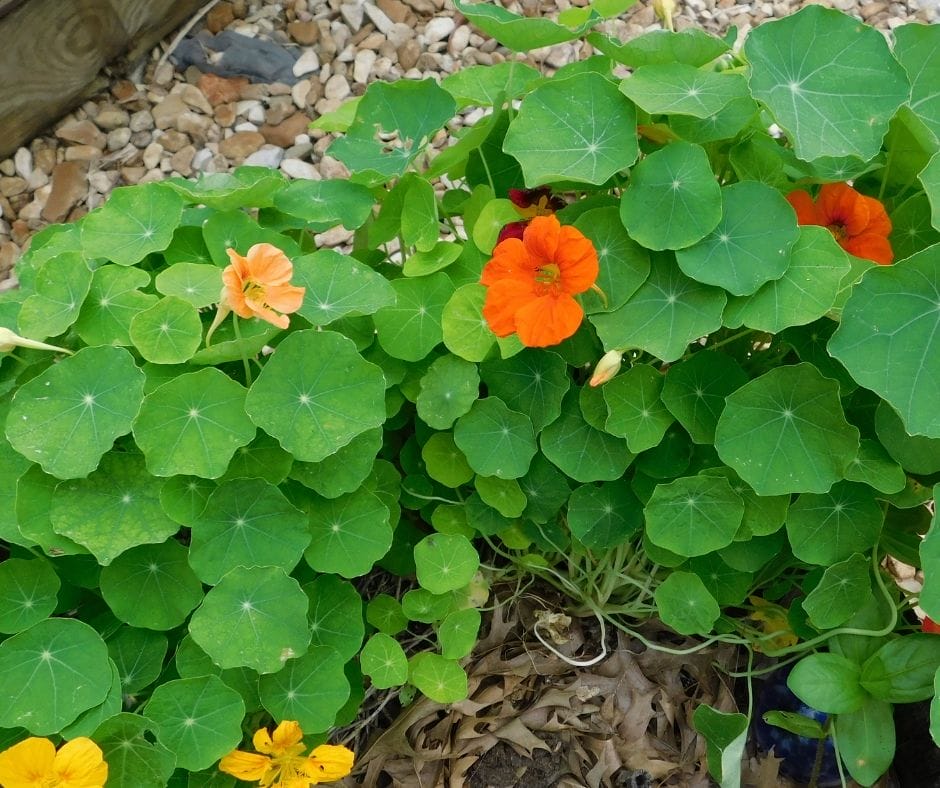
The plants grow in a large mound, with pretty round leaves that grow singularly on individual stems. They draw aphids away from other garden plants, so they make a great trap plant to protect your tender vegetables.
Nasturtium Companion Planting
Nasturtiums are one of the best companion plants you can grow in the vegetable garden. These cheerful flowers don’t just add beauty with their bright blooms and trailing vines, they can also help support healthier plants and attract beneficial insects to your garden.
Many gardeners plant nasturtiums near vegetables because they act as a trap crop. Aphids are especially attracted to nasturtiums, which can help draw pests away from crops like tomatoes, peppers, squash, cucumbers, and beans. Instead of pests attacking your vegetables first, they are often drawn to the nasturtiums instead.
Nasturtiums also attract pollinators such as bees, butterflies, and hummingbirds. More pollinators in the garden can help improve pollination and increase harvests from flowering vegetables and fruits.
Another benefit of nasturtium companion planting is that the sprawling leaves can help shade the soil and reduce moisture loss during hot Oklahoma summers. Their vines make wonderful living mulch around taller crops.
Some of the best plants to grow with nasturtiums include:
- Tomatoes
- Cucumbers
- Squash and pumpkins
- Beans
- Cabbage family plants
- Peppers
- Fruit trees
Gardeners often tuck nasturtiums around the edges of raised beds, let them spill from containers, or plant them beneath taller crops. Pole beans and nasturtiums together can create a beautiful cottage garden look while making good use of vertical growing space.
Nasturtiums are especially popular in organic gardens because they help encourage biodiversity without chemicals. Even if you only plant a few, they bring color, pollinators, and helpful garden activity into the space.
As an added bonus, nasturtium flowers and leaves are edible. The blooms have a slightly peppery flavor similar to arugula and make a beautiful addition to salads, charcuterie boards, and summer dishes.
Are Nasturtiums edible?
Nasturtium flowers and leaves are edible. They have a delicate, peppery flavor similar to arugula. They make a wonderful addition to green salads. The smaller leaves are more tender and flavorful than the larger ones.
For a fun idea check out how to grow your own salad garden here.
Harvest the flowers and leaves early in the morning before the heat of the day for the best flavor.
Best Types of Nasturtiums
Nasturtiums come in many beautiful colors, sizes, and growth habits, making them a wonderful addition to almost any garden. Some varieties trail and spill beautifully from containers or raised beds, while others grow in compact mounds that work well along borders and pathways.
Choosing the best type of nasturtium depends on how you want to use them in your garden.
Trailing Nasturtiums
Trailing nasturtiums produce long vines that can spread several feet across the garden. These are perfect for cottage gardens, hanging baskets, raised beds, and letting spill over edges and fences. Their lush leaves and bright blooms create a soft, whimsical look that gardeners love.
Popular trailing varieties include:
- Jewel Mix
- Alaska Mix
- Tall Trailing Mix
- Phoenix Nasturtium
These varieties are excellent for companion planting because they spread through the garden and help cover bare soil.
Bush Nasturtiums
Bush nasturtiums stay more compact and tidy, usually growing in small mounds rather than long vines. They work especially well in containers, small gardens, and along walkways where you want controlled growth.
Popular bush varieties include:
- Peach Melba
- Empress of India
- Whirlybird Mix
Bush types are often easier for beginner gardeners because they need less space and maintenance.
Variegated Nasturtiums
Some nasturtiums are grown not only for their flowers but also for their stunning foliage. Variegated types have marbled green-and-white leaves that add extra beauty even when the plants are not blooming.
Alaska Mix is one of the most popular variegated nasturtiums and looks beautiful in flower beds and patio containers.
Edible Nasturtiums
All common garden nasturtiums are edible, but some varieties are especially prized for salads and edible flower gardens because of their vibrant colors and mild peppery flavor.
Bright orange, yellow, and deep red blooms look stunning scattered over fresh summer dishes. The leaves, flowers, and even seed pods can be eaten.
Best Nasturtiums for Beginners
If you are new to growing nasturtiums, start with easy, reliable varieties like:
- Jewel Mix
- Alaska Mix
- Empress of India
These grow quickly from seed, tolerate poor soil, and usually bloom heavily all season long with very little care.
One of the best things about nasturtiums is that no matter which variety you choose, they bring beauty, pollinators, and cheerful color into the garden while helping support a healthy growing space.
Can You Grow Nasturtiums in Containers?
Nasturtiums grow wonderfully in containers and are one of the easiest flowers for beginner gardeners to grow in pots. Their bright blooms and trailing vines make them perfect for patios, porches, balconies, raised beds, and small-space gardens.
Because nasturtiums are not overly picky about soil, they actually thrive in containers where many other flowers struggle. In fact, soil that is too rich can cause lots of leaves but fewer flowers, so container growing is often ideal for producing beautiful blooms.
Trailing varieties look especially stunning spilling over the edges of containers and hanging baskets. Compact bush varieties work well in smaller pots and window boxes.
To grow nasturtiums in containers successfully:
- Choose a pot with good drainage holes
- Use a basic potting mix that is not heavily fertilized
- Place containers in full sun for best flowering
- Water regularly during hot weather, especially in Oklahoma summers
- Avoid too much fertilizer or you may get more leaves than flowers
Nasturtiums grow quickly from seed and can usually be planted directly into the container where they will grow. Their large seeds are easy for children to handle, making them a fun choice for gardening with kids.
One of the best things about growing nasturtiums in containers is how versatile they are. You can:
- Grow them beside vegetables on a patio garden
- Mix them with herbs and edible flowers
- Let them trail from hanging baskets
- Add color to porch containers
- Create a cottage garden look in small spaces
Nasturtiums also help attract pollinators even when grown in pots, bringing bees and butterflies close to your outdoor living spaces.
As an added bonus, the flowers and leaves are edible, so container-grown nasturtiums can be both beautiful and useful. Snip a few blooms to brighten salads, garnish summer dishes, or decorate charcuterie boards with colorful edible flowers.
Growing nasturtiums is such a great project and has so many benefits for the grower. I hope you will try your hand at it too.
For more edible flower ideas, check these out:


Your garden is lovely. I’m trying to get nasturtiums planted here in Arizona before the heat comes.
I hope you can do it. They are so lovely. Thank you for the compliment!
Many years ago, I held a wedding shower for my daughter-in-law to be. I dressed a garden salad with nasturtiums without the greens (only flowers). I did not know both were edible.
Needless to say, it dressed up the dining room table and I heard ohs and positive comments from the guests.
Helena
They are gorgeous. I bet it was so lovely!